Among many cosmic myths and pseudo-scientific theories, a special place is occupied by the legend about the planet Gloria - a mysterious "twin" of the Earth, which supposedly hides exactly behind the Sun, always remaining invisible to observers from our planet. This idea, which has stirred the imagination of generations of fans of science fiction and conspiracy theory, has proved remarkably viable. Let’s find out where this concept came from, how it evolved, and why it cannot be incorporated into the real physics of the solar system.
The thought of an invisible planet hidden behind a light is not new. Pythagoreans in ancient Greece also reflected on the "proto-creature" (Antikhton) - a hypothetical body that revolves around some central fire and is hidden from Earth observers. It was more a philosophical, intellectual construct intended to explain the number of celestial bodies important for the numerological constructions of the Pythagorean school than an attempt at astronomical discovery.

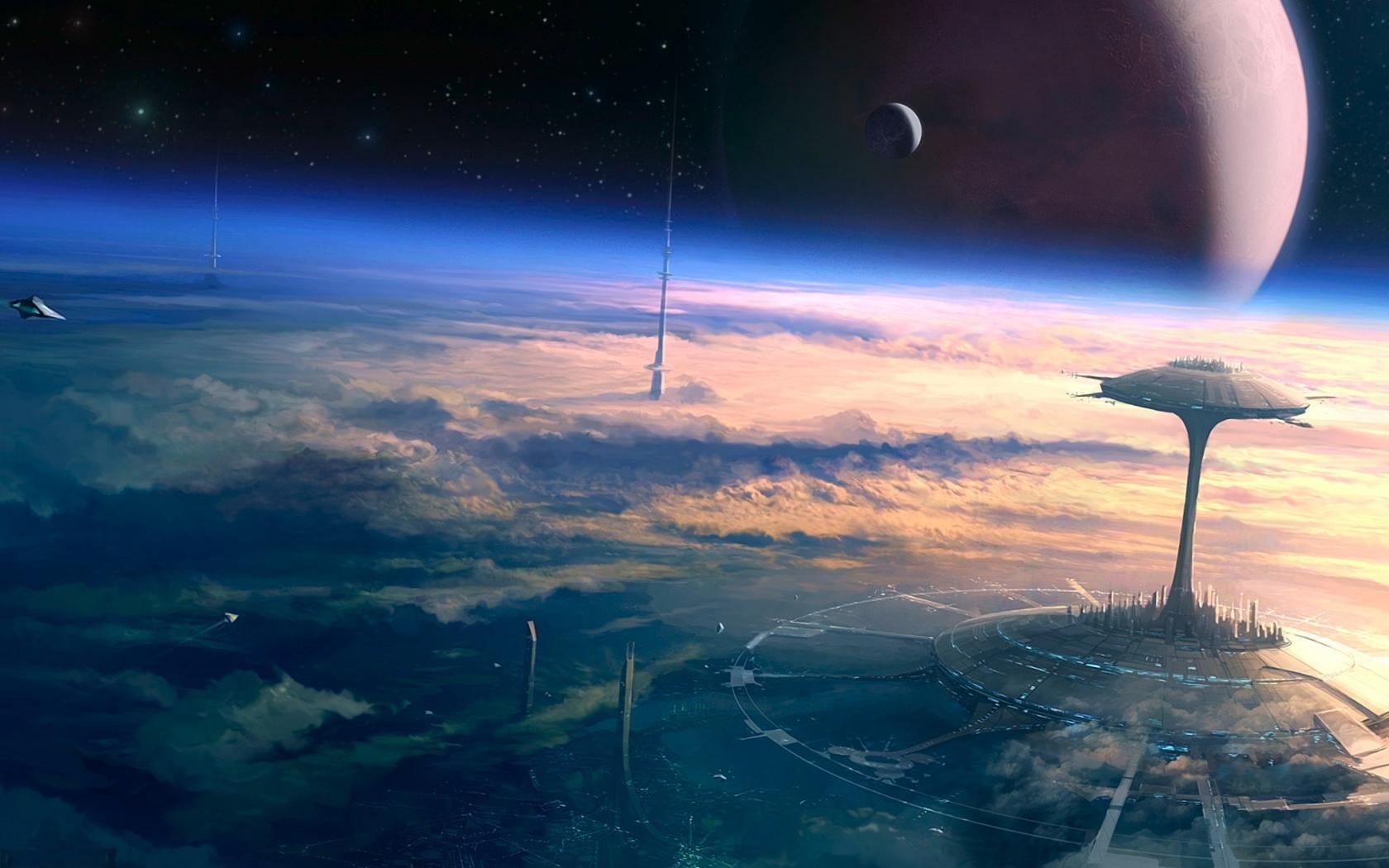
After millennia, the idea was reborn in a different guise. In the twentieth century, the concept of a "twin planet" was given a powerful boost by science fiction. The most famous contribution was made by a German science fiction writer who described in his works the planet Gloria (or Antisemus) - our planet’s twin, which orbits the same but diametrically opposite point, so that it always remains hidden behind the sun.
From the standpoint of a layperson unfamiliar with orbital mechanics, the idea of a planet beyond the Sun sounds logical: if a body moves in the same orbit as the Earth but is glowing on the opposite side, we will never be able to see it - the Sun will cover it permanently. Intuitively, this seems like a clever explanation of why such a planet has not yet been discovered.

Moreover, in the middle of the twentieth century, when humanity was just beginning to explore space seriously, and telescopes and methods of observation were far from perfect, such hypotheses did not seem utterly fantastic. Scientists have indeed considered various hypothetical bodies of the Solar System, from Vulcan (the supposed planet within the orbit of Mercury) to various trans-Neptunian objects. Against this background, the idea of a hidden "Antisemli" fit into the general context of the search for unknown celestial bodies.
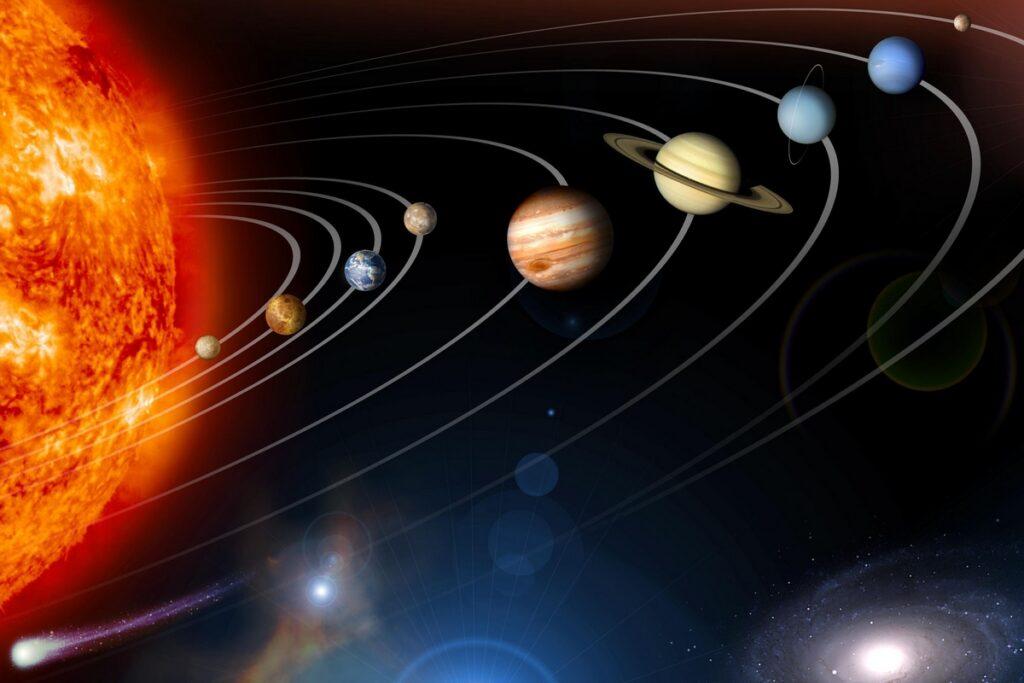
The main problem with the planet Gloria’s concept lies in the fundamental laws of celestial mechanics. In order for an object to remain permanently hidden beyond the Sun from the point of view of the Earth observer, it must be located at a point known as a "anti-solar point" - that is, in the same orbit as the Earth, but with a shift of exactly 180 degrees.
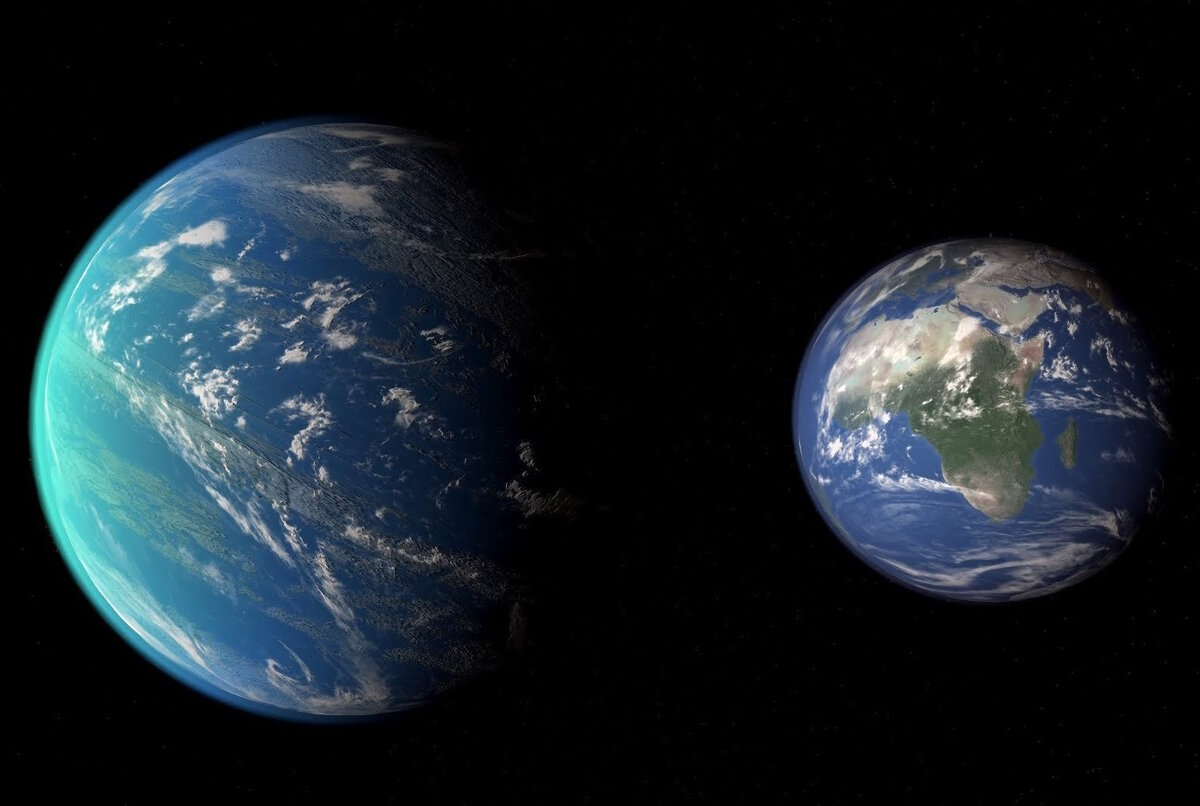
The problem is that this configuration is highly unsustainable. The gravitational effects of other planets in the Solar System, especially the massive Jupiter and Venus, constantly cause outrage around all bodies, including hypothetical Antisemus. Even if such a planet existed at the time of the formation of the Solar System, gravitational interactions would inevitably shift its orbit over a relatively short period (on an astronomical scale). It would either gradually deviate from the perfect antiphase with Earth, becoming visible, or be pushed out of orbit altogether.
Calculations show that even minimal deviations - of several degrees - would cause the planet to become periodically visible from Earth, especially during periods when both planets simultaneously are close to orbital points. allow the detection of an object above or below the plane of a solar disk.
The final blow to the myth of the planet Gloria brought about a space age. With the launch of artificial satellites, orbiting stations and interplanetary probes, humanity has been able to observe the Solar System from different points, not just from the surface.
Missions to the inner planets of the Solar System, in particular to Venus and Mercury, as well as solar probes that flew through various points of Earth’s orbit at different angles, played a key role. If a hypothetical Antisemus existed, spacecraft that are not on the same line as the Earth and the Sun would inevitably record its presence - by gravitational action reflected by light or direct visual observation.
The NASA STEREO programs - two spacecraft launched in 2006 specifically for stereoscopic observation of the Sun from different orbital points - played a special role. These probes gave the opportunity to "look" at the Sun from perspectives not available for terrestrial telescopes. No evidence of a planet the size of Earth was found.
Beyond direct observations, there is a more fundamental argument against the existence of the planet Gloria: its gravitational effects. A planet the size of Earth would have enough mass to influence the orbits of neighboring bodies - especially Venus and Mars. Astronomers have been tracking the orbital parameters of all planets in the Solar System for centuries with high precision, and any anomalies in their motion caused by the gravity of an invisible massive body would necessarily be recorded.
Nothing like this has been observed. The orbits of Venus and Mars are entirely consistent with calculations based on known Solar System objects, without the need to introduce additional gravitational mass behind the Sun.
Despite extensive scientific evidence for the theory’s inconsistency, the myth of the planet Gloria (sometimes called "Antisemene" or "Planet X" in conspiratorial circles) continues to circulate on the internet, especially in resources devoted to conspiracy theories. This is due to several psychological factors: the attraction of mystery, a lack of confidence in official science, and the simplicity of the idea itself, easily understood without special knowledge of astrophysics.