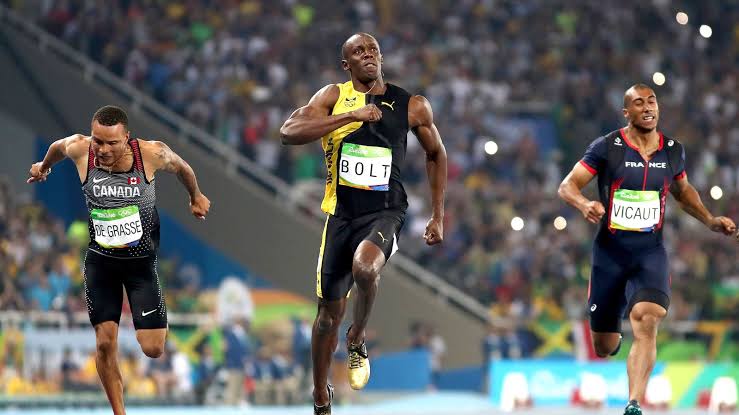
On August 16, 2009, the blue track of the Olympic Stadium in Berlin became the stage for an athletic performance that redefined the absolute limits of human capability. As the starting pistol fired, eight of the world's most elite sprinters exploded from their blocks. But within less than ten seconds, one man separated himself from the rest, crossing the finish line and glancing at the clock. It read 9.58 seconds. With that single race, Usain Bolt cemented his status as the fastest human being in recorded history.
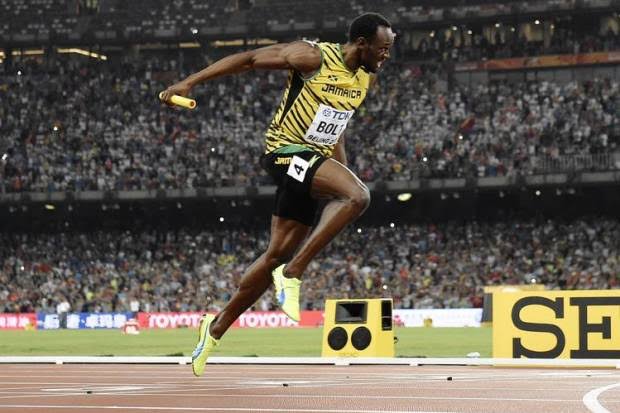
To truly understand Bolt’s supremacy, one must look at the sheer numbers behind his historic runs. During that legendary 100-meter final in Berlin, Bolt covered the distance at an average speed of 37.58 km/h. However, his average speed does not tell the whole story. Between the 60-meter and 80-meter marks, Bolt reached an astonishing peak velocity of 44.72 km/h. To this day, no other human being has ever been clocked at a higher speed on foot. Just four days later, he shattered the 200-meter world record as well, stopping the clock at 19.19 seconds.
What made Bolt so unique was his unconventional physics. Standing at 6 feet 5 inches (1.95 meters), he defied the traditional scouting reports for short-distance sprinters. Historically, sports scientists believed that the ideal sprinter should be of average height, as shorter legs allow for quicker turnover and a faster start. Bolt’s long limbs meant his acceleration out of the starting blocks was occasionally slower than his shorter rivals. However, once he reached top speed, his stride length became an unstoppable weapon. While an average elite sprinter requires about 44 to 45 strides to complete a 100-meter race, Bolt could cover the entire distance in just 41 strides.
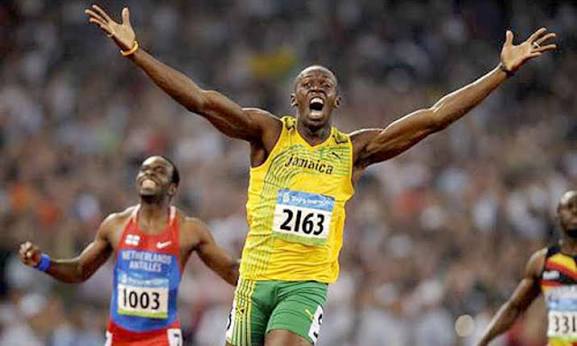
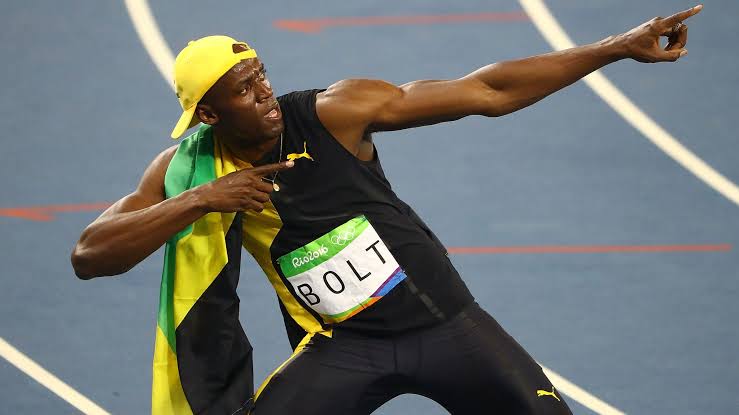
Beyond the cold statistics, Bolt’s impact on modern athletics was cultural. Before his arrival, elite sprinting was a tense, hyper-focused discipline defined by stoic expressions and psychological warfare in the marshalling room. Bolt brought a refreshing sense of joy, charisma, and showmanship to the track. He would smile at cameras, dance before the race, and introduce the world to his iconic "Lightning Bolt" pose. This casual demeanor never detracted from his performance; instead, it seemed to fuel his relaxed running style, which scientists note is crucial for maintaining peak velocity without tightening up.
His career achievements are a mountain that current athletes still struggle to climb. Bolt is an eight-time Olympic gold medalist and an eleven-time World Champion. He is the only sprinter in history to win the Olympic 100-meter and 200-meter titles at three consecutive Olympic Games (Beijing 2008, London 2012, and Rio 2016).
Although Usain Bolt officially retired from competitive athletics after the 2017 World Championships, his shadow still looms large over the sport. Nearly two decades after they were set, his records remain unbroken, serving as a monument to human potential. He proved that boundaries are often just illusions, leaving behind a legacy as the undisputed king of speed.