The concept of extraterrestrial life feels thoroughly modern, born of sci-fi novels and 20th-century UFO sightings. However, looking back into the deepest roots of human history reveals a fascinating pattern.
Across different continents, centuries before the invention of telescopes or space travel, ancient cultures built their entire mythologies, religions, and monuments around the belief that intelligent beings descended from the cosmos to shape humanity. While modern science labels these accounts as metaphors or folklore, ancient astronaut theorists view them as literal records of paleocontact.
The Sumerians and the Sky Gods
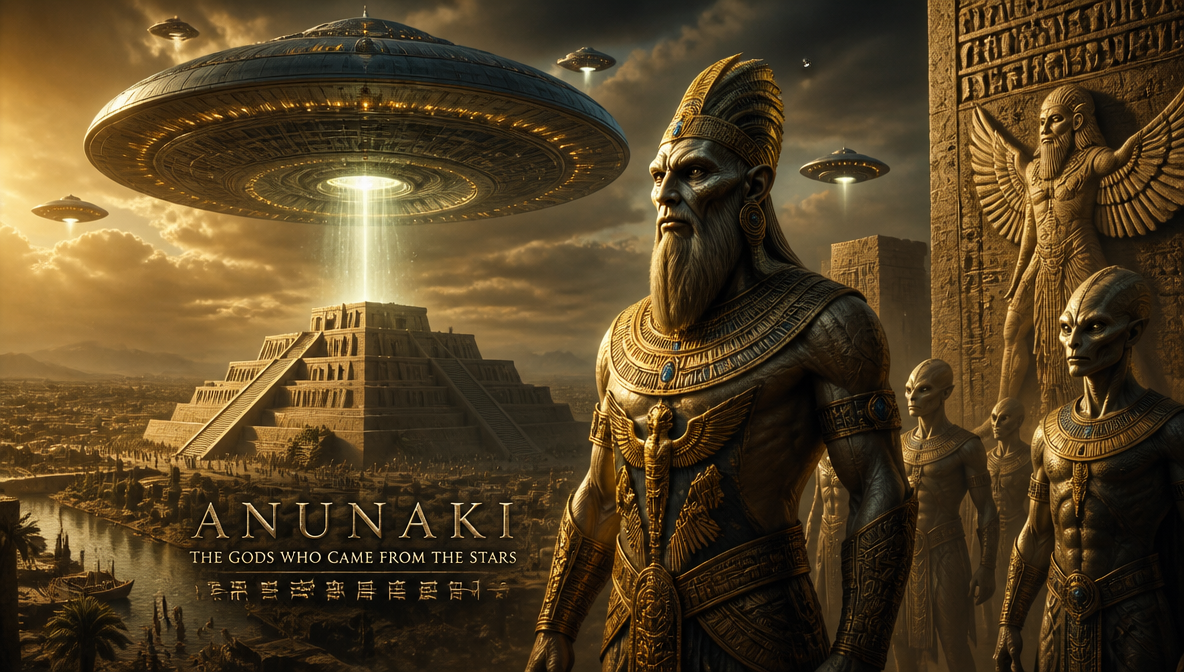
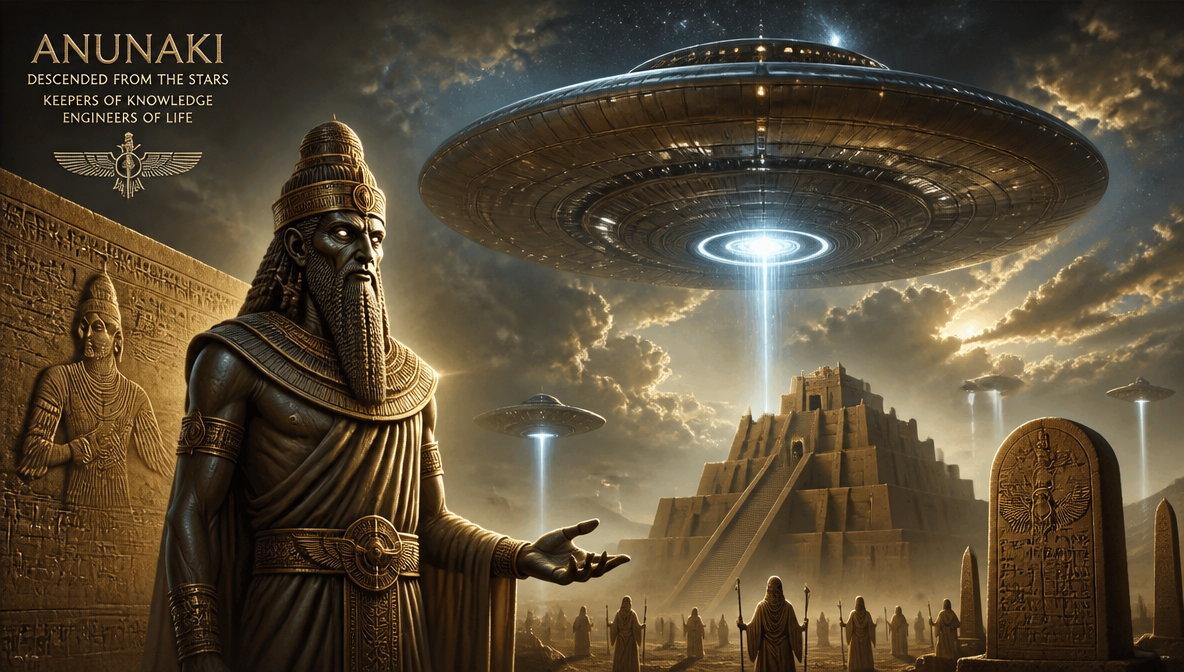
The oldest known civilization on Earth, the Sumerians of Mesopotamia (modern-day Iraq), left behind thousands of clay tablets that provide the cornerstone for theories about ancient aliens. According to their cuneiform writings, humanity did not evolve in isolation. Instead, they were engineered by a race of divine beings known as the Anunnaki, a term translating to "those who from heaven came to earth."
Sumerian texts, popularized by authors like Zechariah Sitchin, describe the Anunnaki as physical entities arriving in fiery vessels from a hidden planet named Nibiru. The myths suggest these cosmic travelers arrived to mine gold to repair their own planet's atmosphere. To ease their labor, they genetically altered primitive hominids, creating modern humans as a worker class. The Sumerians credited the Anunnaki with granting them advanced laws, agricultural skills, and incredibly precise astronomical calculations that seemed far ahead of their time.
The Dogon and the Secret of Sirius

Deep in Mali, West Africa, lives the Dogon tribe, an isolated indigenous people whose ancient religious traditions contain an astronomical anomaly that baffles researchers to this day. Central to Dogon mythology is the belief in the Nommo, a race of amphibious, teacher-like beings who allegedly descended from the sky in a massive, spinning vessel accompanied by fire and thunder.
According to Dogon priests, the Nommo came from the Sirius star system. Long before modern telescopes existed, the Dogon possessed highly specific knowledge about Sirius B, a white dwarf star completely invisible to the naked eye. They knew Sirius B was incredibly dense, had an elliptical orbit, and took exactly 50 years to circle Sirius A. Mainstream historians suggest the Dogon acquired this knowledge from European travelers in the early 20th century. However, the tribe insists this data was gifted to their ancestors centuries ago directly by their interstellar guests.
The Maya and the Feathered Serpent
In Mesoamerica, the Maya civilization displayed a borderline obsession with the cosmos. Their complex calendars mapped the movements of Venus and the stars with astonishing mathematical precision. Mayan religion was deeply rooted in the worship of Kukulkan (known to the Aztecs as Quetzalcoatl), a feathered serpent god who descended from the heavens to teach them writing, mathematics, and architecture before departing back into the sky.
The most famous physical piece of evidence linking the Maya to ancient alien theory is the sarkophagus lid of King Pakal, discovered in the ruins of Palenque. Carved in stone, King Pakal is depicted in a reclined position. While traditional archaeologists interpret the carving as Pakal traveling through the Mayan underworld, alternative theorists see a striking resemblance to a modern astronaut piloting a spacecraft, complete with breathing tubes, control pedals, and flames erupting from an exhaust pipe.
The Vedic Vimanas of Ancient India
The sacred Sanskrit texts of ancient India, such as the Mahabharata and the Ramayana, offer perhaps the most explicitly technological descriptions of ancient flight. These texts frequently mention Vimanas—mythological flying palaces and war chariots utilized by the gods to navigate the skies and travel between planets.
Unlike the abstract spiritual vessels found in many religions, Vimanas are described with heavy mechanical detail. They are said to have used mercury propulsion, produced roaring noises, and fired devastating energy weapons that mirror modern descriptions of nuclear explosions. The texts describe flashes "brighter than a thousand suns" and subsequent sicknesses that caused hair and nails to fall out, leading theorists to believe that ancient Indians were witnessing high-tech extraterrestrial warfare.
Whether these ancient beliefs are a reflection of overactive imaginations, misinterpretations of natural phenomena, or literal records of visitors from another world, they prove one thing: humanity has always looked to the stars not just for wonder, but for its origins.