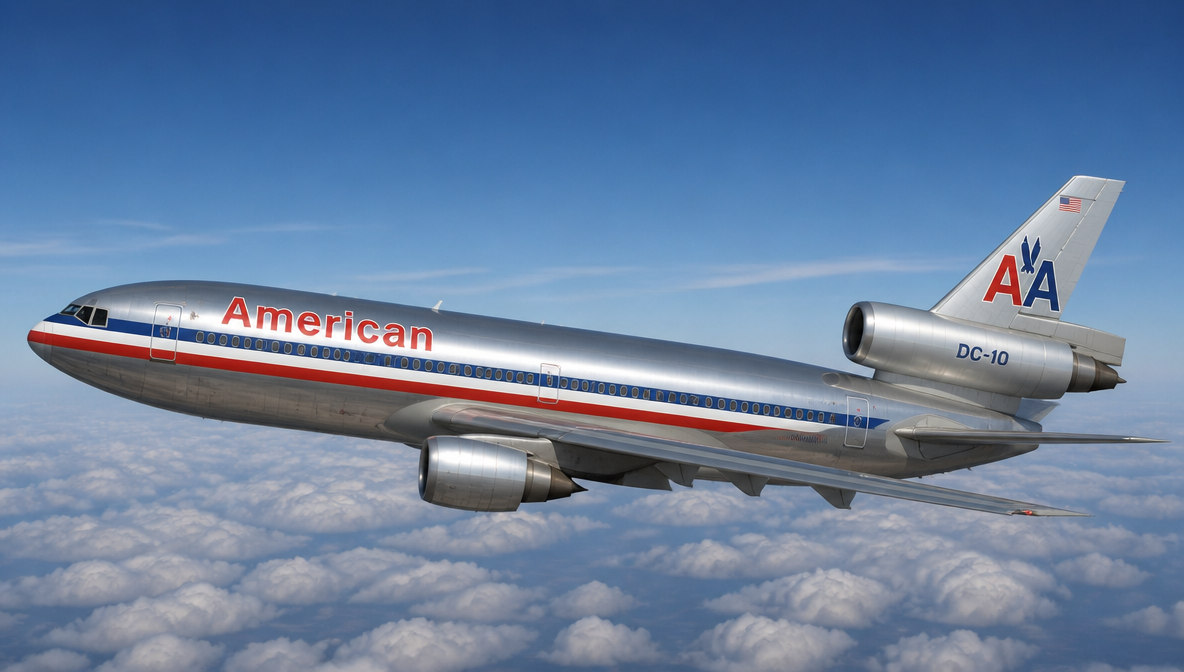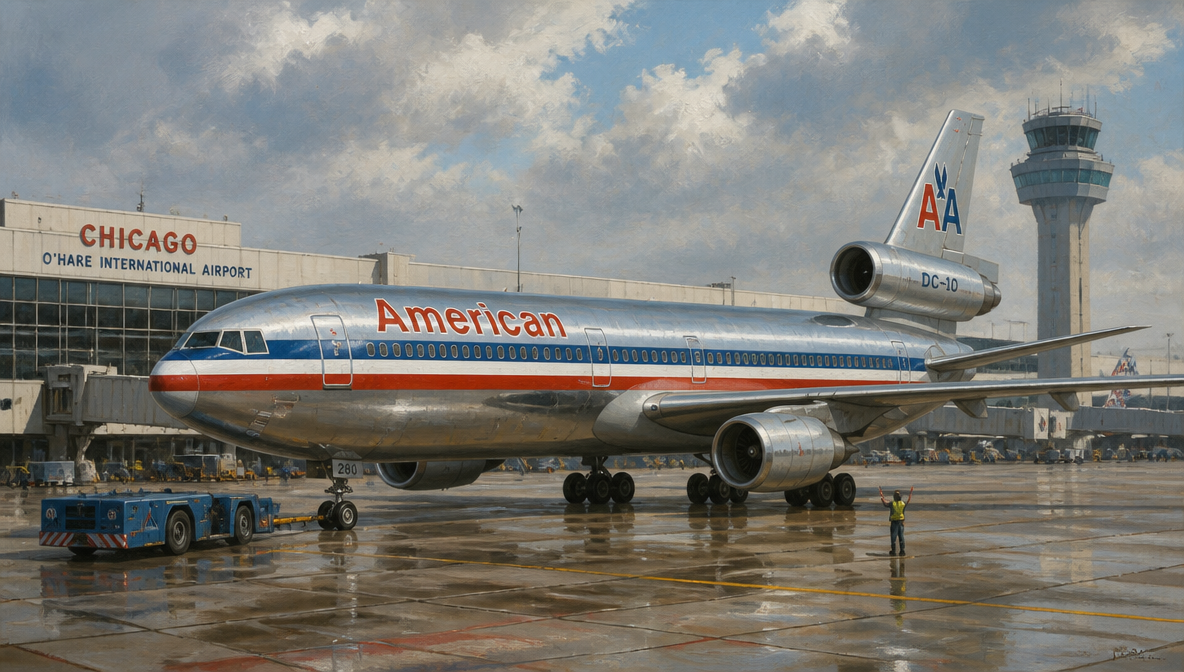
On May 25, 1979, American Airlines Flight 191 lined up for takeoff at Chicago’s O’Hare International Airport. The McDonnell Douglas DC-10-10 was bound for Los Angeles with 258 passengers and 13 crew members on board. What should have been a routine transcontinental flight transformed within seconds into the deadliest aviation accident in United States history (excluding the terrorist attacks of September 11, 2001).
All 273 people perished—271 on board the aircraft and two individuals on the ground.
The tragic collapse of Flight 191 fundamentally reshaped the aviation industry's approach to mechanical maintenance, regulatory oversight, and cockpit telemetry.
Sixty Seconds of Terror
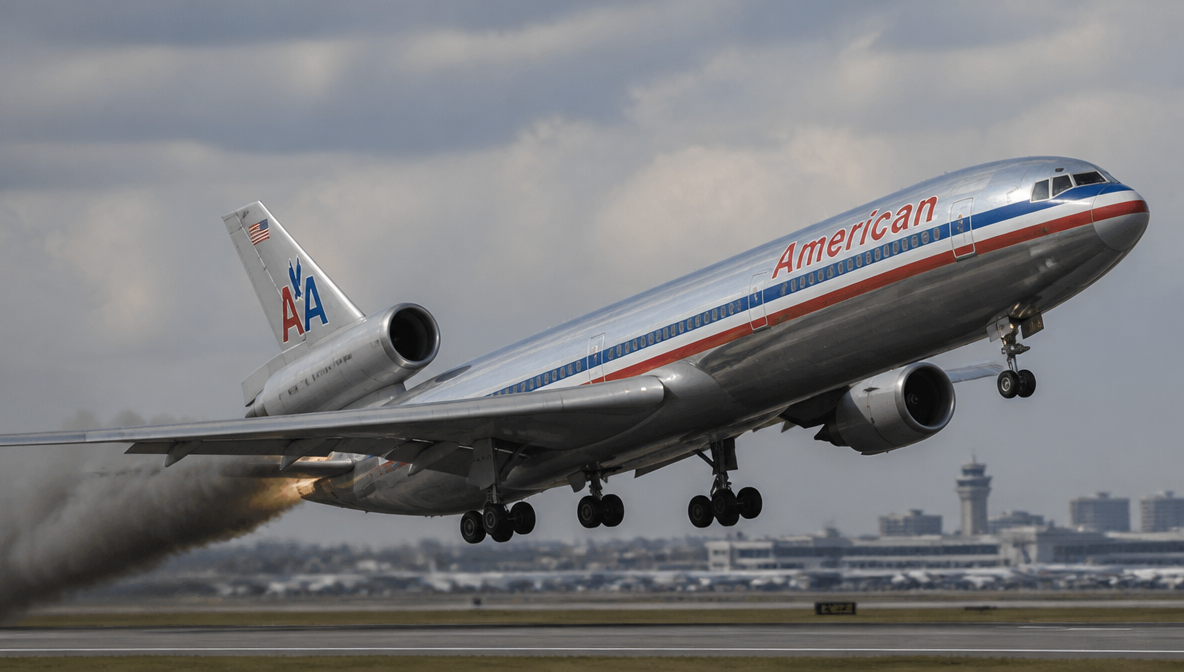
The disaster began precisely at the moment of rotation. As the aircraft accelerated down Runway 32R to a speed of approximately 300 km/h, the entire number-one engine and its pylon assembly abruptly sheared away from the left wing. The massive engine rolled over the top of the wing and crashed onto the runway behind the aircraft.
Because the engine had torn through the electrical systems, the flight crew lost vital warning lights, instrument displays, and the cockpit voice recorder power. Critically, the pilots could not see the left wing from their cockpit seats and were completely unaware that the engine had physically detached. Believing they were facing a standard engine failure, the experienced captain followed official procedures to maintain control.
The crew stabilized the aircraft and began climbing to an altitude of 325 feet. However, as the pilots slowed the aircraft to the recommended safety speed, the left wing suddenly stalled. Without warning, the massive airliner rolled 112 degrees to the left, pointed its nose downward, and plunged into a field near a local trailer park. The impact and subsequent fireball vaporized the aircraft, instantly killing everyone on board.
The Investigation: A Fatal Shortcut
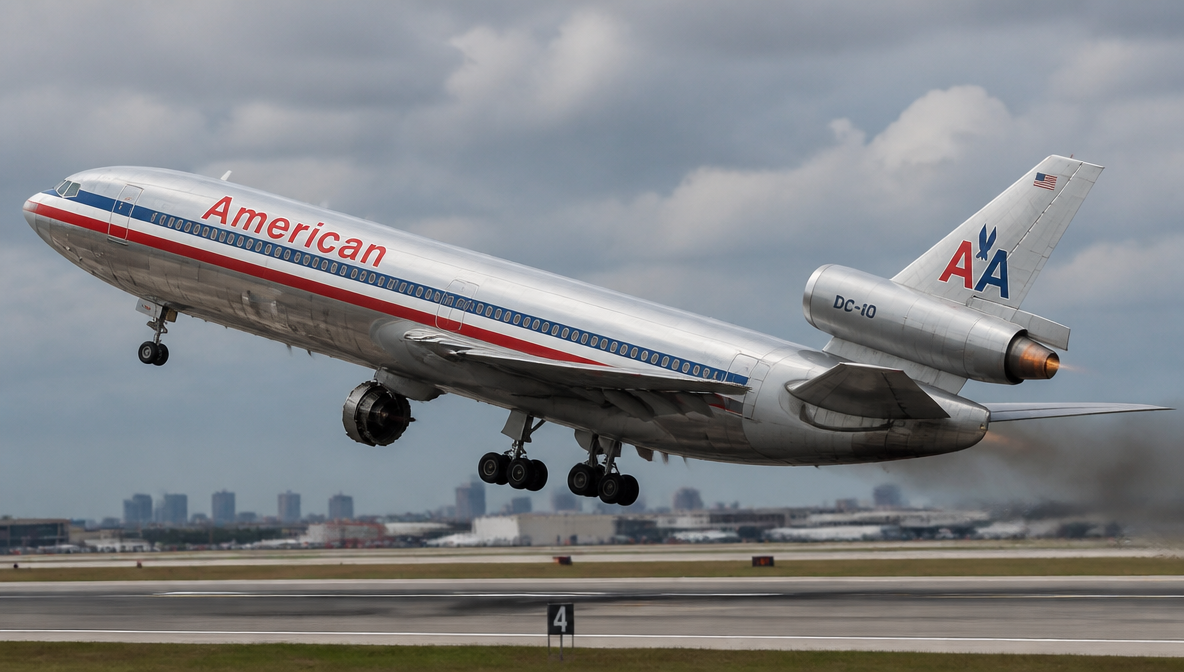
The National Transportation Safety Board (NTSB) launched an exhaustive investigation to determine why a newly inspected wide-body aircraft had suffered such a catastrophic failure. Investigators quickly ruled out a manufacturing defect or sabotage, pointing instead to a grave violation of maintenance protocols by American Airlines.
- The Forklift Procedure: Two months prior to the accident, mechanics at an American Airlines maintenance facility had removed the left engine pylon for routine service. To save roughly 200 man-hours, managers ordered the mechanics to remove the engine and the heavy pylon together as a single unit using a commercial forklift, rather than separating them as mandated by McDonnell Douglas.
- The Hidden Fracture: The forklift operator struggled to precisely balance the massive weight of the dual assembly. During the removal process, the pylon struck the wing structure, causing an invisible micro-fracture in the metal attachment bulkhead. Over the next two months of flight, the normal vibrations of takeoff and landing caused the hidden crack to expand until it finally snapped under the immense stress of the Chicago takeoff.
- Asymmetrical Stall: When the engine tore free, it severed the primary hydraulic lines located inside the wing's leading edge. Without hydraulic pressure, the aerodynamic slats on the left wing retracted automatically. This sudden change caused the left wing to lose its lifting capability while the right wing continued flying normally, causing the unrecoverable roll.
Structural Legacy and Aftermath
The crash inflicted a near-fatal blow to the public reputation of the McDonnell Douglas DC-10. Following the NTSB's initial findings, the Federal Aviation Administration (FAA) grounded all 138 DC-10 aircraft operating in the United States and banned foreign-registered models from entering American airspace.
Ultimately, the tragedy led to strict global bans on using unauthorized heavy machinery for precision aircraft component removal. It also led to mandatory design modifications requiring redundant hydraulic locking mechanisms for wing slats, ensuring that such a catastrophic chain reaction could never happen again.