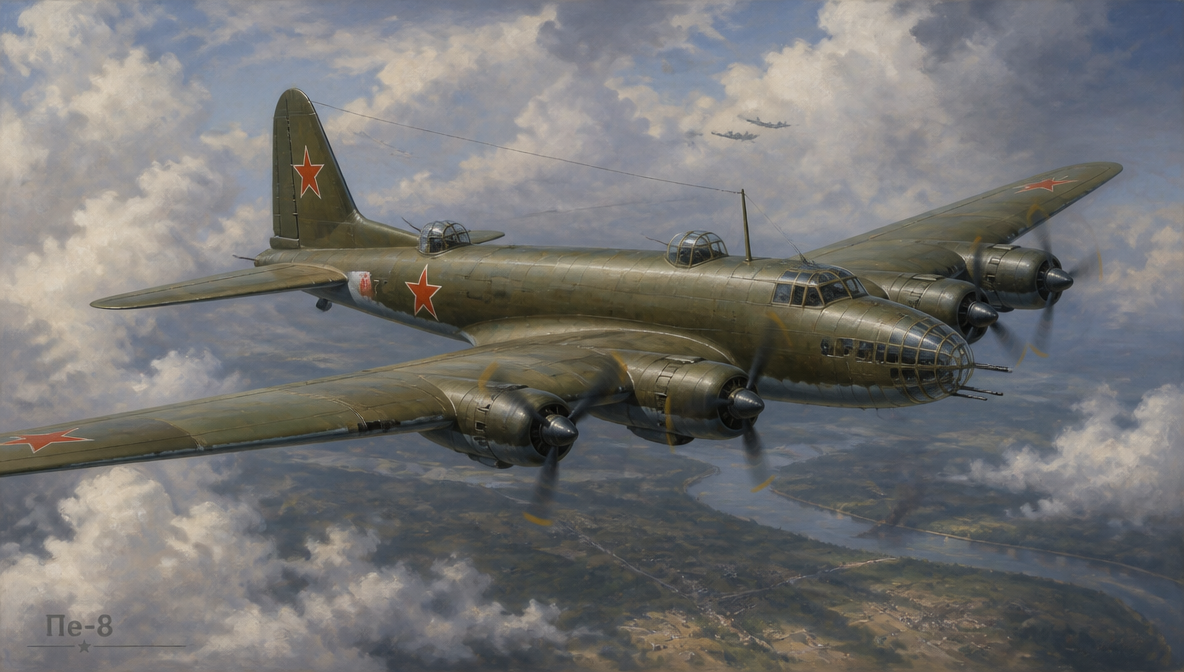
In May 1942, at the height of World War II, one of the most daring and dangerous diplomatic missions in history took place in absolute secrecy. Soviet Foreign Minister Vyacheslav Molotov embarked on a high-stakes journey from Moscow to London and Washington, D.C.
His mission was to meet face-to-face with British Prime Minister Winston Churchill and U.S. President Franklin D. Roosevelt to secure the opening of a Second Front in Europe and solidify the Allied alliance.
While the diplomatic outcomes were historic, the physical journey itself was a miraculous feat of aviation endurance, executed not in a luxury civilian transport, but inside a heavily armed Soviet military bomber.
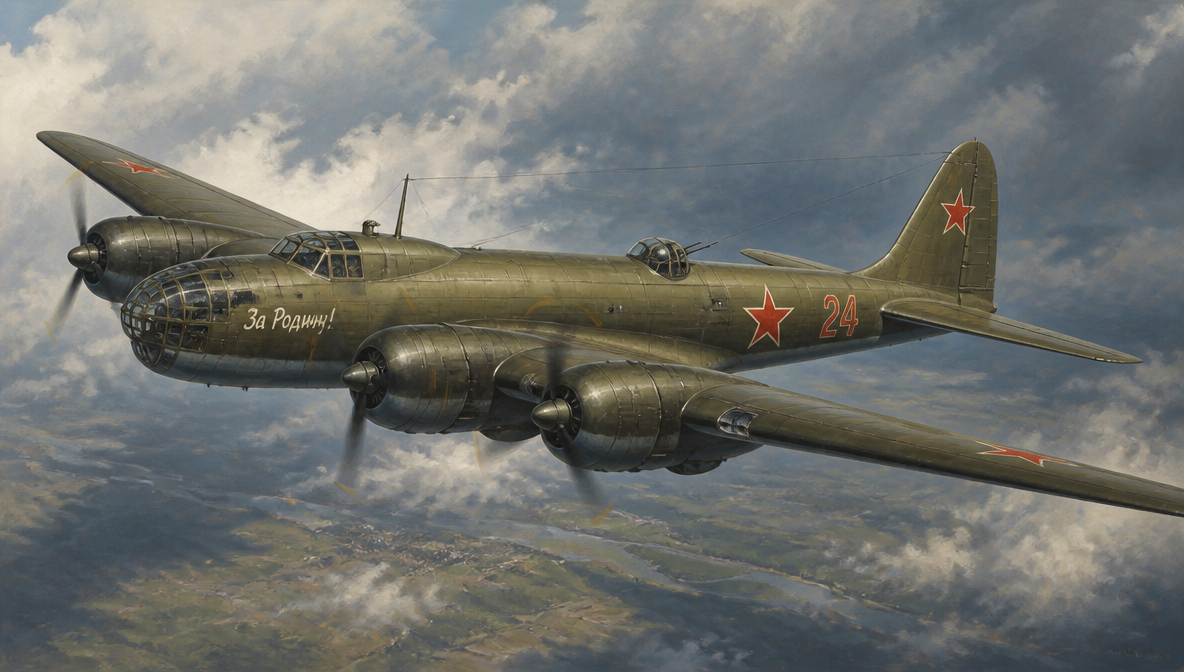
The Arsenal of Choice: The Pe-8 Bomber
Civilian airliners of the 1940s lacked the range, speed, and altitude capabilities to cross Nazi-occupied Europe and the Atlantic safely. To transport Molotov, Soviet leadership chose the Petlyakov Pe-8 (then designated the TB-7), a massive four-engine heavy bomber with the tail number 42066.
The Pe-8 was a technological marvel of the Soviet air fleet, capable of flying at altitudes of up to 10,000 meters (33,000 feet). At this extreme ceiling, the bomber could fly above dense cloud cover, hidden from German radar, and well beyond the operational limits of most Luftwaffe fighter interceptors.
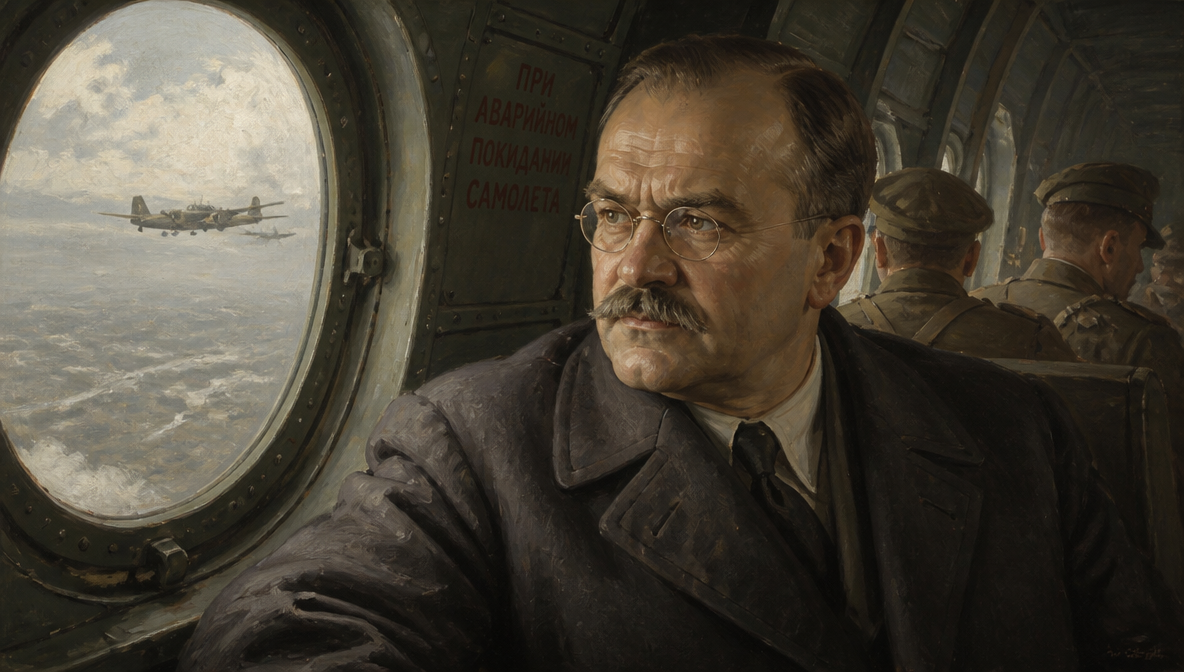
However, flying at such altitudes in a military bomber came with extreme physical hardships. The aircraft’s cabin was entirely unpressurized and unheated. For hours on end, Molotov, his diplomatic aides, and the aircrew were forced to wear bulky, fur-lined flight suits, heavy boots, and restrictive rubber oxygen masks. At 30,000 feet, temperatures inside the cabin regularly plummeted to minus 40 or 50 degrees Celsius, forcing the high-ranking diplomats to freeze in near-darkness while listening to the deafening roar of the engines.
Across the Frontlines
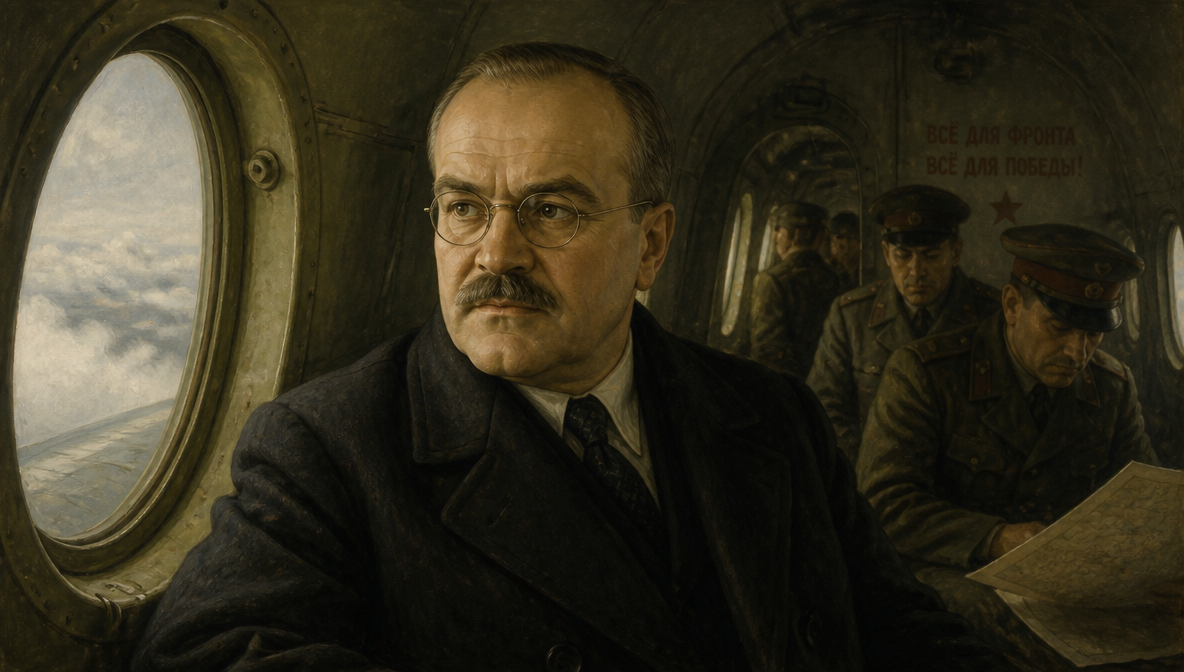
Commanded by the legendary Soviet pilot Endel Puusepp, the bomber took off from an airfield near Moscow on May 19, 1942. The flight path was a logistical nightmare. To reach the United States, the crew had to fly over the frontlines, cross German-patrolled territory in the North Sea, and stop for refueling in Scotland and Iceland, before making the long, treacherous transatlantic leap via Canada to Washington.
Every leg of the flight carried the risk of mechanical failure or interception. On the return trip, Puusepp chose a direct path across central Europe, dodging anti-aircraft artillery fire. Despite the constant danger, the crew’s expert navigation and the rugged design of the Pe-8 brought the diplomatic party safely to their destination.
Impact and Legacy
When the massive, camouflage-painted combat bomber rolled to a stop at an airfield near Washington, American military officials and President Roosevelt were stunned. The arrival of a top-tier foreign minister in a heavily armed bomber perfectly underscored the desperate, fighting spirit of the Soviet Union.
Molotov successfully negotiated crucial lend-lease extensions and pushed the Western Allies closer to a unified European strategy. For his extraordinary skill and bravery during the 20,000-kilometer round trip, pilot Endel Puusepp was awarded the nation's highest honor: Hero of the Soviet Union.