The question of where paradise or heaven is located is one of the oldest and most profound inquiries in human history. Across millennia, theologians, philosophers, scientists, and poets have attempted to map this elusive realm. While heaven is traditionally envisioned as a physical place suspended somewhere beyond the clouds, modern perspectives have shifted, viewing it instead as a state of consciousness, a spiritual dimension, or a metaphorical ideal found right here on Earth.
The Geography of the Cosmos: Traditional Religious Views
For centuries, ancient civilizations and major world religions localized paradise within a literal, three-tiered cosmos: hell below, earth in the middle, and heaven above.
- The Celestial Realm: In traditional Christianity, Islam, and Judaism, heaven was historically conceptualized as a physical place located above the firmament. Early astronomical models, like the Ptolemaic system, even placed the "Empyrean"—the highest heaven filled with pure light and the divine presence—just beyond the sphere of the physical stars.
- The Earthly Garden: Other traditions located paradise directly on our world. In the Book of Genesis, the Garden of Eden is described with specific geographic markers, mentioning real rivers like the Tigris and Euphrates. This led generations of medieval explorers to launch expeditions to find a hidden, physical paradise on Earth, often searching the remote corners of Asia, Africa, or Mesopotamia.
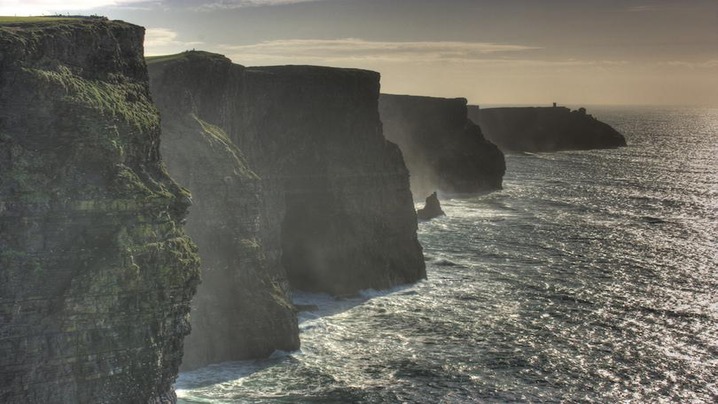
- Mythological Lands: Similarly, Celtic mythology spoke of Tír na nÓg (the Land of Youth), a mythical paradise located across the western sea, while Greek mythology placed the Elysian Fields at the western margins of the known Earth.
The Shift to a Spiritual and Multi-Dimensional Realm

As humanity's understanding of the physical universe expanded through modern astronomy, the literal concept of a heaven hidden just above the clouds became untenable. Telescopes and space exploration revealed an endless expanse of vacuum, stars, and galaxies, prompting a major shift in how the location of paradise is understood.
Today, most theologians and spiritual leaders define heaven not by its spatial coordinates, but by its relational and spiritual nature. Heaven is viewed as a dimension of existence that operates outside our conventional understandings of time and space. Rather than being millions of light-years away, it is conceptualized as a reality that exists parallel to or interwoven with our own, accessible not by physical travel, but through spiritual transition or a fundamental shift in perception.
Paradise as an Internal State of Mind
In Eastern spiritual traditions, such as Buddhism and Hinduism, the concept of a static, external paradise is often replaced by internal attainment. Nirvana or Moksha is not a geographical destination you arrive at after death; it is a state of ultimate liberation, peace, and profound awakening achieved by transcending the ego.
From this perspective, the search for paradise ends inward. Heaven and hell are not physical destinations waiting for us in the afterlife, but internal environments we construct through our minds, actions, and desires today.
Finding Paradise on Earth
In secular and contemporary philosophy, the search for paradise has returned to its earthly roots. Stripped of mystical overtones, "paradise" represents a harmonious way of living. It is found in moments of profound connection with nature, the deep bonds of human love, artistic expression, and communities built on peace and justice. Ultimately, the location of paradise may not be a mystery to solve in the cosmos, but a reality to cultivate within our own minds and share with the world around us.