For the vast majority of its existence, Earth spun through the cosmos without a single human being to witness it. In the modern world, it is easy to adopt an anthropocentric view of history, seeing the planet as a stage built specifically for human civilization. However, empirical data from geology and paleontology tells a starkly different story.
If we compress the 4.5-billion-year history of Earth into a single 24-hour calendar year—where January 1st represents the formation of the planet—anatomically modern humans (Homo sapiens) do not arrive until December 31st at approximately 11:36 PM.
Long before the first human toolmakers walked the African savannah, Earth was already an ancient, dynamic world that had experienced billions of years of biological evolution, catastrophic climate shifts, and massive transformations of flora and fauna.
The Longevity of Microscopic Rule: The Precambrian
The story of life on Earth began surprisingly early. Roughly 3.8 to 4 billion years ago, in a hostile environment of volcanic activity and toxic atmospheric gases, the first microscopic, single-celled organisms emerged in the primordial oceans. For the next three billion years—accounting for nearly 85% of Earth's biological history—life remained exclusively microscopic.
During this vast stretch of time, known as the Precambrian, these simple bacteria and archaea fundamentally altered the planet. Cyanobacteria mastered photosynthesis, pumping vast amounts of oxygen into the atmosphere during the Great Oxidation Event. This chemical revolution paved the way for complex, multicellular life, culminating in the enigmatic Ediacaran biota—soft-bodied, leaf-like sea creatures that lived just before the dawn of skeletal animals.
The Explosive Evolution of the Paleozoic Era
Around 541 million years ago, the planet underwent the "Cambrian Explosion," a relatively brief evolutionary period during which most major animal phyla first appeared in the fossil record. The oceans filled with armored trilobites, complex predators like Anomalocaris, and early vertebrates.
As the Paleozoic Era progressed, life achieved its most significant milestone: the colonization of land. Plants developed vascular systems, turning barren continents into dense, towering swamps of giant club mosses and ferns. Insects took to the air, with species like Meganeura (a dragonfly relative) achieving a wingspan of over 70 centimeters due to hyper-oxygenated atmospheric conditions. Eventually, primitive amphibians evolved into early reptiles, establishing the first complex terrestrial ecosystems long before mammals existed.
The Reign of the Reptiles:

The Mesozoic Era
Following the Permian mass extinction—the most devastating extinction event in Earth's history, which wiped out 95% of marine species—the Mesozoic Era (252 to 66 million years ago) began. This was the legendary Age of Dinosaurs.
For over 180 million years, dinosaurs dominated every ecological niche on land, while massive marine reptiles like ichthyosaurs and plesiosaurs ruled the seas, and pterosaurs controlled the skies. The Mesozoic was a period of intense continental drift, as the supercontinent Pangea fractured into the continents we recognize today. It was also an era of profound biological innovation, witnessing the appearance of the first true mammals, the evolution of birds from theropod dinosaurs, and the emergence of flowering plants (angiosperms), which radically transformed the global landscape with color and nectar.
The Dawn of Mammals: The Cenozoic Era
The reign of the dinosaurs came to an abrupt end 66 million years ago when an asteroid impact triggered a global winter. The vacancy left by giant reptiles allowed surviving mammalian lineages to diversify rapidly during the Cenozoic Era.
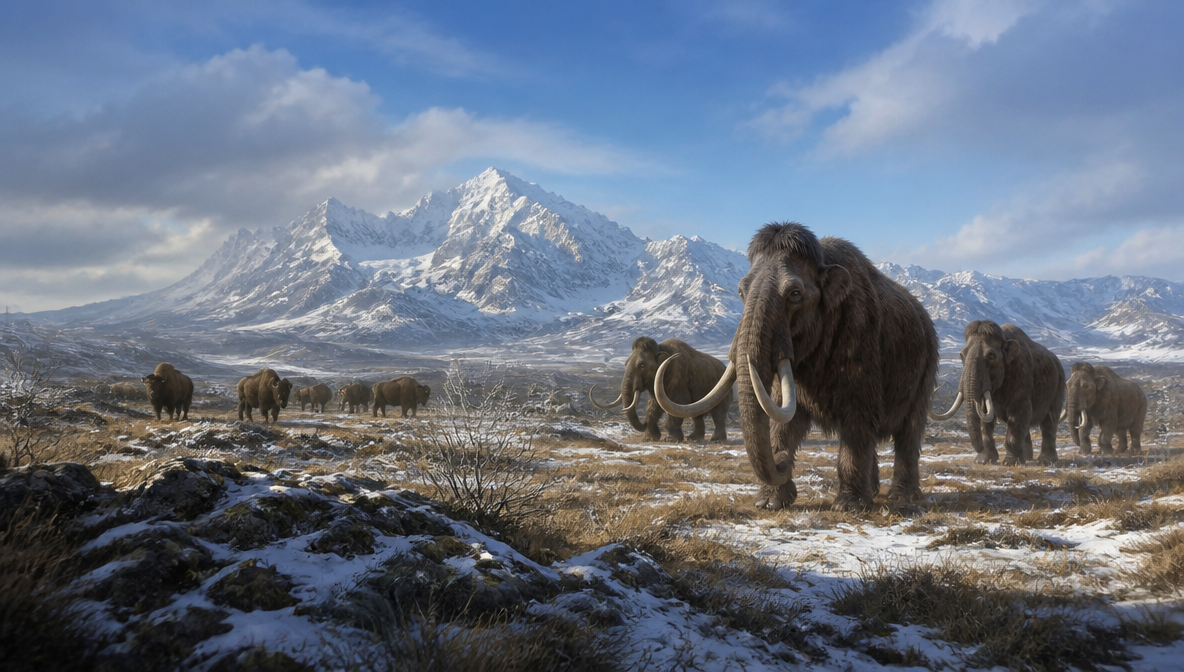
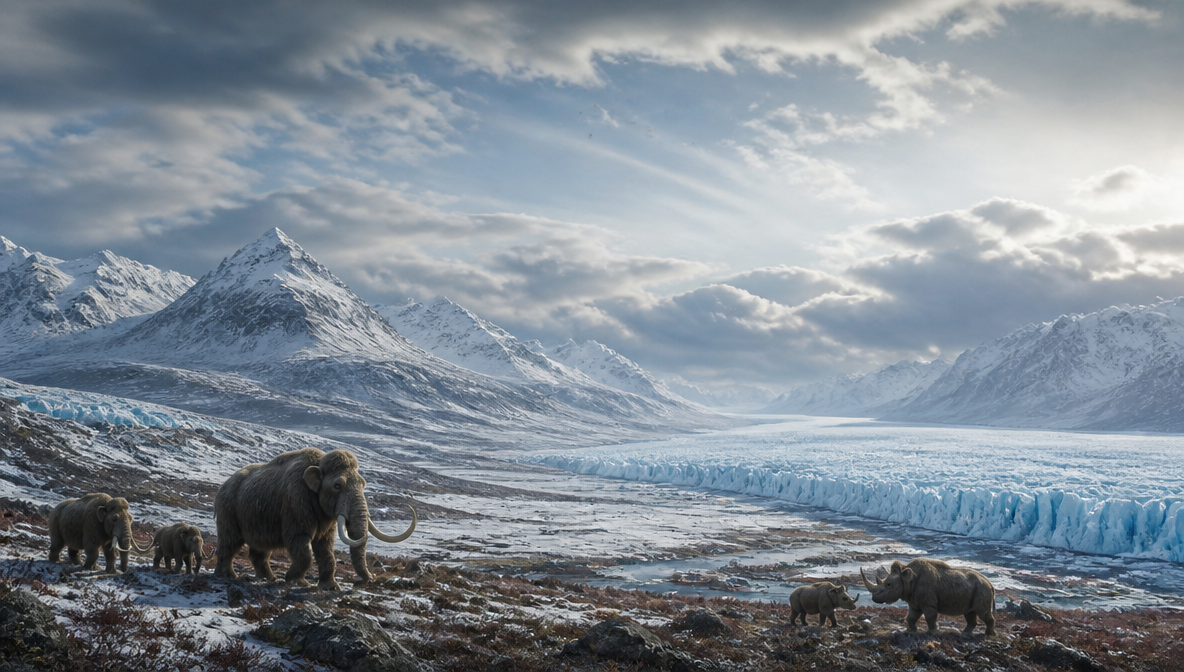
Earth became populated by spectacular "megafauna." Oceans filled with ancestral whales, while land masses were ruled by creatures like Paraceratherium (the largest land mammal to ever live), woolly mammoths, saber-toothed cats, and giant ground sloths. It was only within the final moments of this era, roughly 300,000 years ago, that environmental pressures in Africa led to the evolution of Homo sapiens.
Conclusion
The biological history of Earth before humans is not merely a prelude to our arrival; it is a testament to the resilience and creative power of evolutionary biology. Earth has been a world of microbes, a world of giant insects, a world of armored fish, and a world of dinosaurs. Humanity is not the main plotline of Earth's biography, but rather a compelling, very recent chapter in an ancient, unfolding cosmic story.