For centuries, the primary limitation of firearms was their slow rate of fire. Muzzle-loading flintlock and percussion pistols required soldiers to manually pour gunpowder, ram a lead ball down the barrel, and prime the pan after every single shot. In the heat of battle, a missed shot often meant death. The invention of the revolver fundamentally changed the nature of combat and personal defense by introducing a reliable, mechanical way to fire multiple shots in rapid succession.
The Early Prototypes (16th–18th Centuries)
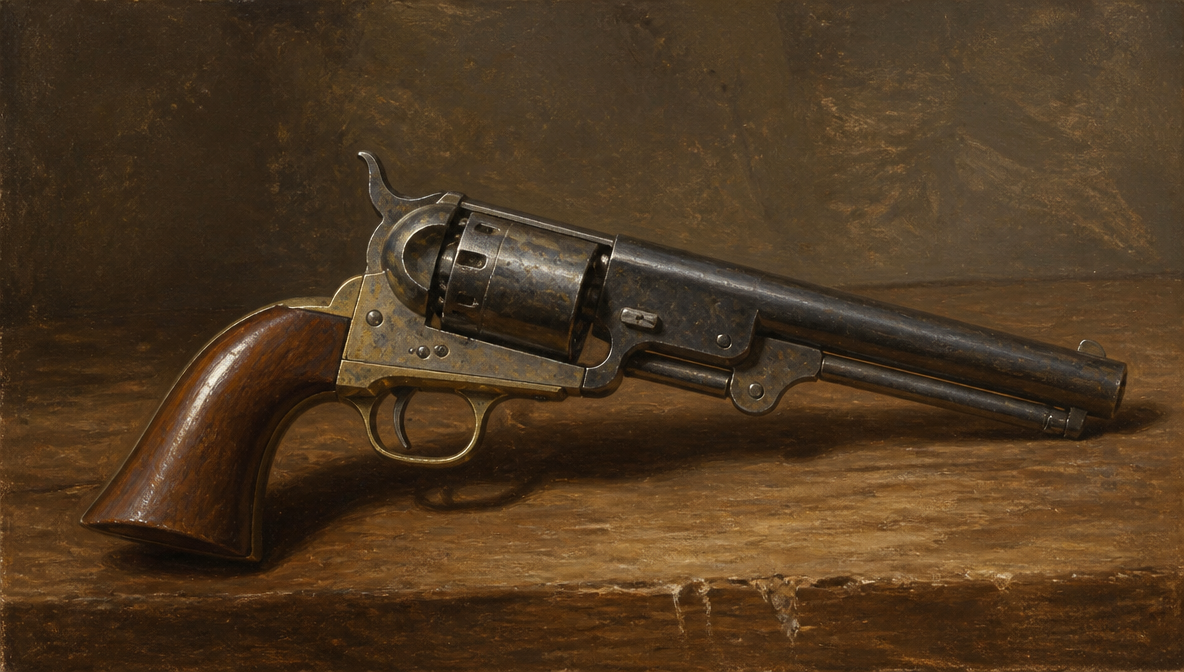
The concept of a rotating cylinder containing multiple explosive charges is much older than many realize. Early matchlock and flintlock revolving handguns date back to the late 1500s. A prime example is a snaphaunce revolver created by German master Hans Stopler in 1597.
However, these early models were deeply flawed. Each chamber in the cylinder had to be manually primed, and there was a constant, terrifying risk of "chain-fire"—a phenomenon where the spark from one shot accidentally ignited the gunpowder in adjacent chambers, causing the entire cylinder to explode and maiming the shooter. Consequently, these weapons remained expensive, handmade oddities reserved for wealthy aristocrats.
Samuel Colt and the Mechanical Breakthrough
The true birth of the modern revolver occurred in the 1830s, thanks to an ambitious young American named Samuel Colt. According to legend, while serving as a 16-year-old sailor aboard the brig Corvo in 1830, Colt watched the ship’s capstan (the windlass used to hoist the anchor) and its steering wheel. He noticed that no matter which way the wheel turned, a mechanical clutch could lock it perfectly in place with a single click.
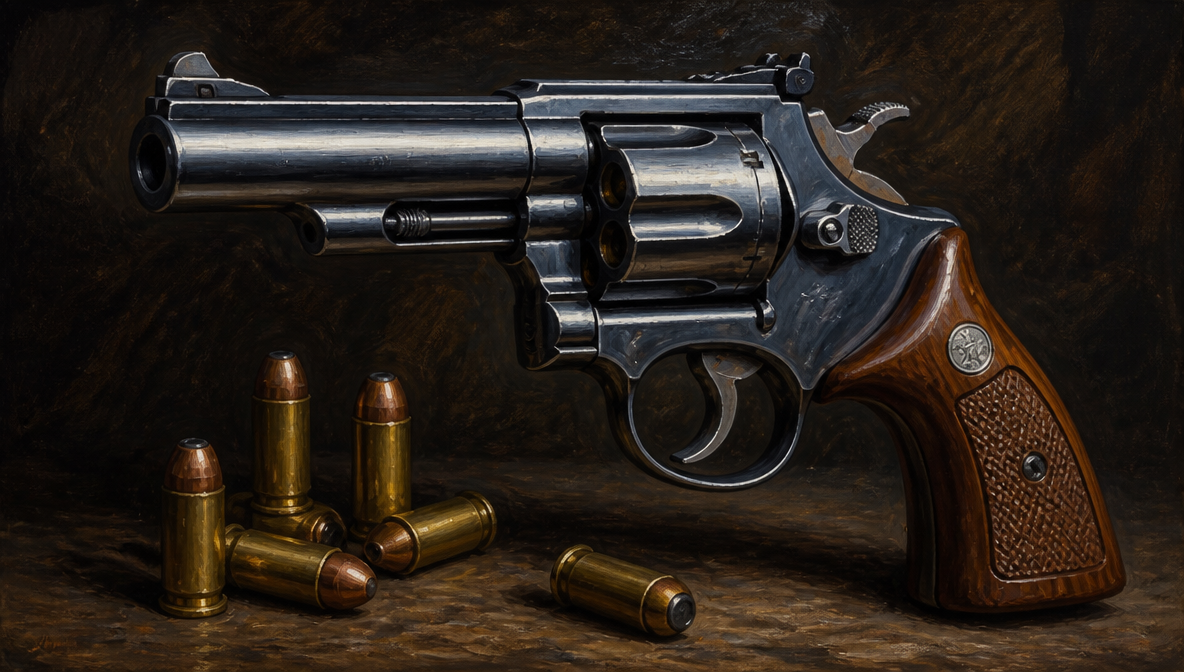
Colt realized this mechanism could be applied to a firearm cylinder. He carved a wooden prototype of a revolver mechanism during his voyage. Colt's brilliant innovation was not the rotating cylinder itself, but the automatic synchronization of the mechanism: cocking the hammer automatically rotated the cylinder and locked it rigidly in perfect alignment with the barrel.
Colt patented his design in Great Britain in 1835 and in the United States in 1836, establishing his factory in Paterson, New Jersey. This coincided with the development of the percussion cap, a small copper cap filled with shock-sensitive chemical compound. The percussion cap effectively isolated each chamber, eliminating the threat of chain-fires and making the revolver practical and safe.
The Metallic Cartridge Revolution
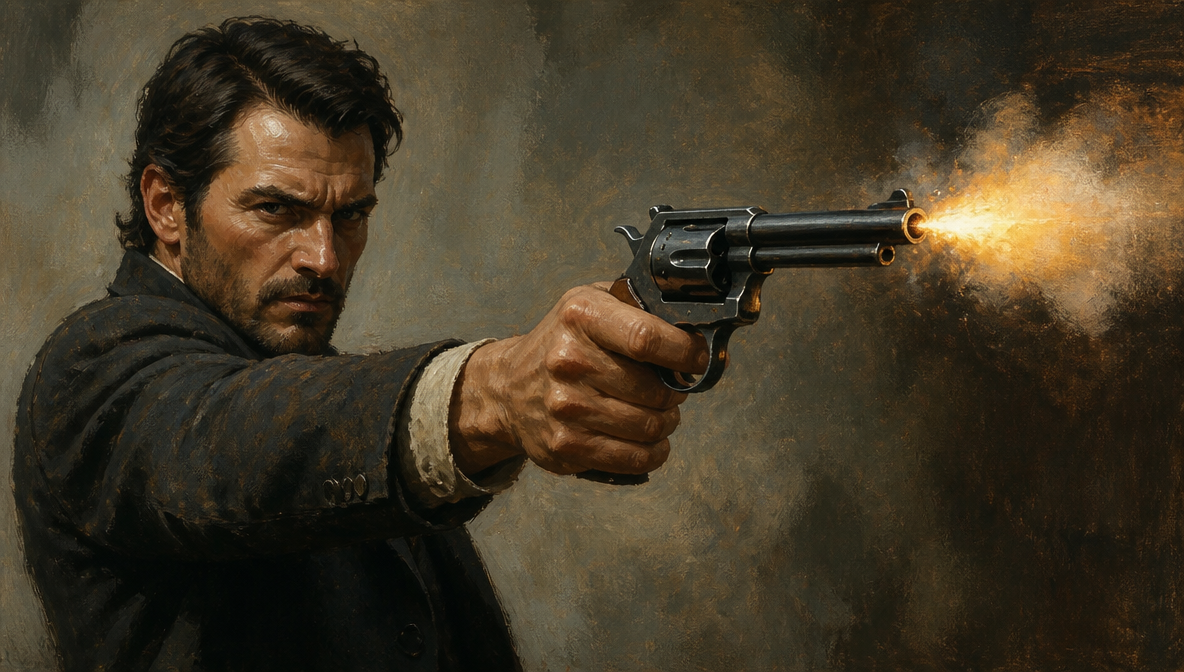
While Colt’s cap-and-ball revolvers dominated the 1840s and 1850s, they still required users to load loose powder and balls into the front of the cylinder. The next major leap came from Horace Smith and Daniel Wesson (Smith & Wesson).
They acquired a patent from an inventor named Rollin White for a bored-through cylinder—a cylinder drilled all the way through from front to back. This allowed the weapon to accept newly invented self-contained metallic unitary cartridges loaded from the rear. This design made reloading a matter of seconds rather than minutes, setting the standard for all modern revolvers to come.
Conclusion
The revolver was a crowning achievement of the Industrial Revolution, transforming firearms from single-use tools into rapid-fire machines. By combining automated mechanical rotation with self-contained ammunition, the revolver changed history, shaping the American West and military tactics worldwide.