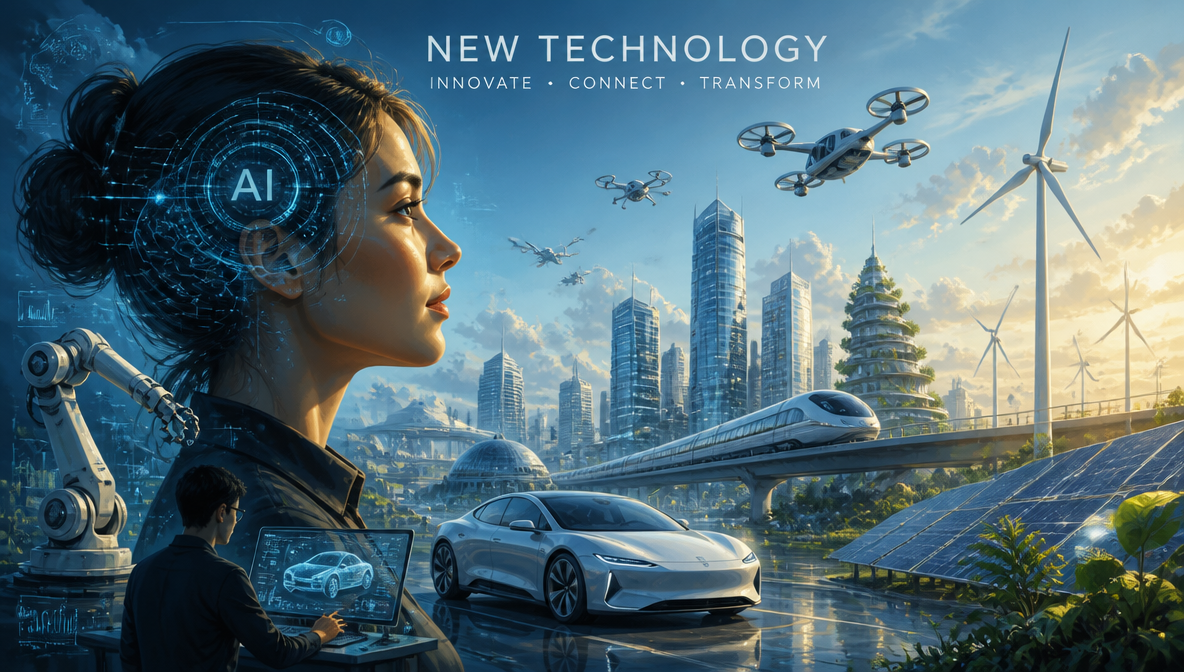
The global technological landscape of 2026 is defined by a profound paradigm shift. For over two decades, the primary engine of innovation was centered in the purely digital realm—software apps, cloud computing, and social media networks. Today, however, the world is witnessing the dawn of a new era.
The defining characteristic of 2026 is the convergence of advanced computing with the material world. Artificial intelligence, quantum mechanics, and molecular biology are leaping out of servers and laboratories to fundamentally reshape infrastructure, healthcare, and global production.
1. Embodied AI and Autonomous Robotics
Artificial intelligence has evolved past the phase of conversational chat-bots and static image generators. In 2026, the industry focus has shifted entirely to Embodied AI—giving neural networks physical bodies or active agency to manipulate the real world.
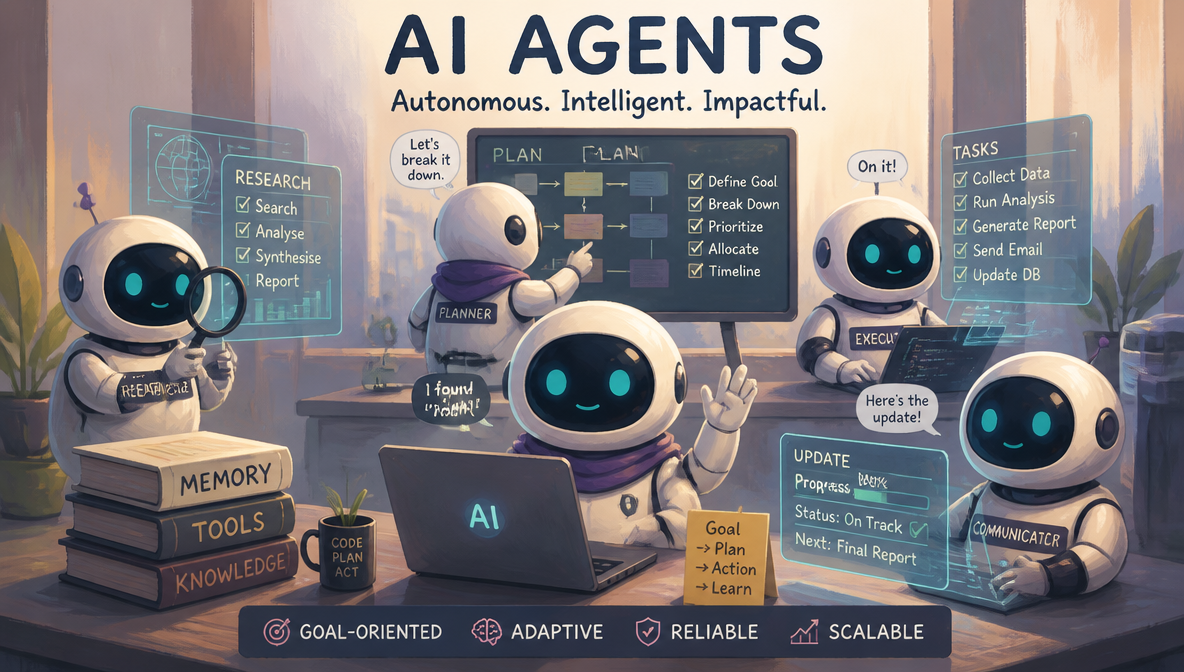
On one front, autonomous multi-modal AI Agents now execute complex, multi-step workflows across industries, managing entire supply chains and financial audits with minimal human oversight. On the physical front, humanoid robotics have reached commercial viability. Powered by vision-language-action models, robots built by enterprises like Tesla, Figure, and Boston Dynamics no longer require rigid pre-programming. Instead, they learn physical tasks—such as sorting inventory, assembling electronics, or operating heavy machinery—by simply watching human demonstrations.
2. Next-Generation Energy and Solid-State Batteries
The global push for decarbonization has triggered a massive wave of material science breakthroughs, successfully breaking the limitations of traditional lithium-ion and silicon technologies.
The automotive sector in 2026 is undergoing a quiet revolution with the commercial introduction of Solid-State Batteries. These power cells replace volatile liquid electrolytes with solid ceramic or polymer materials. The results have redefined electric mobility: vehicles equipped with solid-state packs boast a range exceeding 1,000 kilometers on a single charge, suffer zero performance degradation in sub-zero winter temperatures, and can safely recharge to 80% capacity in under ten minutes. Concurrently, solar technology has experienced a massive efficiency boost through the mass deployment of perovskite-silicon tandem cells, pushing residential energy generation to historic highs.
3. AI-Driven Biotech and Precision Medicine
The marriage of artificial intelligence and biological science has transformed medicine from a reactive discipline into a highly predictive, manufacturing science.
In 2026, pharmaceutical discovery is almost entirely digitized. Generative algorithms accurately simulate protein folding and molecular interactions, compressing the traditional 5-to-7-year timeline for developing new drug candidates down to mere weeks. Furthermore, the clinical application of advanced gene-editing platforms has moved from experimental trials to standard treatment protocols. Doctors are now utilizing targeted molecular therapies to permanently cure hereditary blindness, chronic blood disorders, and specific aggressive cancers by correcting flawed genetic sequences directly inside the patient's cells.
Conclusion
The breakthroughs of 2026 demonstrate that technology is no longer just a digital escape, but an active architect of physical reality. By animating machines with intelligent agency, unlocking the potential of advanced materials, and decoding the complexities of human biology, these innovations are building a more resilient, sustainable, and capable human civilization.